Health Tools Every Office Should Bookmark? Complete Guide for Indian Workplaces (2026)
In many Indian homes, the dream of a “stable office job” or opening a successful coaching institute is a mark of pride. We spend years studying, clearing exams, and setting up our workspaces. But have you noticed how, after just a few months of sitting at that desk, the “cervical” pain starts? Or how the constant glare of the laptop screen makes your eyes feel like they’ve been rubbed with chili powder by 4:00 PM?
Whether you are a tuition teacher in a small room in Kota, a coaching institute owner in Delhi, or an online educator working from a home office in Bangalore, your health is your real “Fixed Deposit.” As per current education trends in India, we are spending more time than ever in front of screens.
Today, we aren’t just talking about physical health; we are talking about Digital Wellness. In this guide, we will look at the specific health tools and habits that every Indian office and coaching center should bookmark to stay fit, focused, and productive.
🔹 What are Office Health Tools?
When we say “health tools,” we don’t just mean a first-aid box (though that is important!). In 2025, health tools are a mix of digital apps, ergonomic websites, and physical resources that help you maintain your posture, protect your eyes, and keep your stress levels in check.
For a tuition teacher, it might be a simple Chrome extension that reminds them to blink. For a coaching owner, it could be a mental health helpline bookmarked for their staff.
🔹 Why is Health Management Important in Indian Offices?
The Indian workspace is unique. We deal with high-pressure “exam seasons,” long commuting hours, and often, cramped sitting spaces.
The Sedentary Trap: Most Indian educators and office goers sit for 8–10 hours. This leads to “sitting disease”—a risk factor for diabetes and heart issues.
Digital Fatigue: With the rise of online coaching (hybrid models), eye strain (Computer Vision Syndrome) has become a common household term.
Mental Pressure: Indian parents and students have high expectations. Managing this “log-kya-kahenge” (what will people say) pressure requires mental resilience tools.
NEP 2020 & Holistic Health: Even the National Education Policy now emphasizes the well-being of educators. A healthy teacher leads to a healthy classroom.
🔹 Essential Health Tools to Bookmark Right Now
Here is a curated list of tools categorized by the specific problems they solve.
1. Tools for Eye Care (Preventing Digital Strain)
If your eyes feel dry or itchy after a 2-hour Zoom class, you need these:
The 20-20-20 Rule (Manual/Reminder): Every 20 minutes, look at something 20 feet away for 20 seconds.
f.lux / Night Light: A software that adjusts your screen’s color temperature according to the time of day. It reduces blue light, which keeps you awake at night.
ProtectYourVision.org: A simple web tool that sets timers for your breaks.
ALT: Office worker in India taking a break from the computer to look at a distance for eye health.
2. Tools for Posture & Ergonomics
Most of us sit on standard “Godrej” style chairs or plastic chairs that aren’t meant for 8-hour shifts.
PosturMinder (Chrome Extension): It pops up to remind you to sit straight.
Ergonomic Calculator: Websites like Ergotron help you calculate exactly how high your desk and chair should be based on your height.
3. Mental Health & Stress Relief
Teaching is one of the most stressful jobs in India.
Wysa: An AI-based “made in India” chatbot that helps you vent and provides CBT (Cognitive Behavioral Therapy) exercises.
iCALL (by TISS): A free, confidential mental health helpline. Every coaching institute should have this number (9152987821) saved and shared with their staff.
Headspace or Insight Timer: Excellent for 5-minute “Desk Meditations” between classes.
4. Physical Activity & Hydration
Water Drink Reminder Apps: Simple but effective for the busy teacher who forgets to drink water between back-to-back batches.
StretchClock: A break timer that shows you simple “Deskercises” (stretches you can do while sitting).
🔹 Step-by-Step: How to Set Up a “Healthy” Digital Office
Setting up a healthy office doesn’t require lakhs of investment. Follow these steps:
Audit Your Chair: If your feet don’t touch the floor, buy a small footrest or even use a stack of old phone directories!
Screen Height: Your laptop screen should be at eye level. If it’s too low, use a Laptop Stand or a few thick textbooks (NCERT books work great for this!).
Bookmark the Tools: Open your browser and create a folder named “Health.” Add f.lux, a hydration tracker, and the iCALL website.
The “Water Bottle” Rule: Keep a 1-liter copper or steel bottle on your desk. Don’t keep it too close—force yourself to reach for it.
🔹 Examples & Case Studies
Case Study 1: The Online Tutor (Home Office)
Rajesh, a Class 10 Maths teacher from Jaipur, started suffering from severe neck pain. He bookmarked a Yoga for Teachers YouTube playlist and started using a Laptop Stand. Within 15 days, his “text-neck” pain reduced significantly because he stopped looking down at his screen.
Case Study 2: The Large Coaching Center
A coaching center in Patna noticed its staff were burnt out during the JEE/NEET peak season. They bookmarked Wysa for their teachers and introduced a mandatory 10-minute “Chai & Stretch” break. Employee satisfaction scores improved by 40%.
🔹 Benefits of Using Health Tools
| For Students | For Parents | For Teachers/Owners |
| Better focus and less fatigue during long study hours. | Peace of mind knowing the home/office environment is safe. | Reduced sick leaves and higher energy for teaching. |
| Prevents early-age spectacles (eye strain). | Lower medical bills for “lifestyle” diseases. | Better “Teacher Brand” image—parents trust healthy, energetic mentors. |
🔹 Common Mistakes to Avoid in India
“Sirf 5 Minute Aur”: We often ignore the break timer, thinking we will finish one more topic. Don’t. Those 5 minutes of ignoring a stretch lead to months of physiotherapy.
Using Blue Light Glasses as a “Cure”: Blue light glasses help, but they aren’t a substitute for looking away from the screen.
Ignoring the “Back Pain”: Many Indians use Moov or Volini and keep working. If the pain persists, it’s a sign to change your chair, not just use a spray.
Self-Medicating for Stress: Instead of talking to a counselor (like iCALL), many people take over-the-counter pills for sleep. Always use the bookmarked professional resources first.
🔹 Cost & Investment (Approx Indian Pricing)
Staying healthy is actually cheaper than getting sick!
Digital Tools: Most are Free (Wysa, f.lux, iCALL).
Laptop Stand: ₹500 – ₹1,200 (Amazon/Flipkart).
Ergonomic Chair: ₹5,000 – ₹15,000 (Local furniture market or brands like Wakefit/Featherlite).
Anti-Glare Screen Guard: ₹300 – ₹800
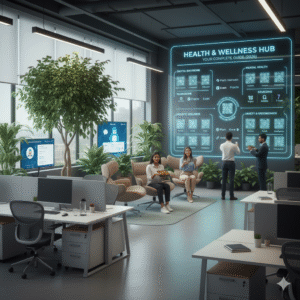
The Perfect Ergonomic Setup
ALT: Proper desk height and chair position for an Indian office worker.
Placement: After the “What are Office Health Tools?” section.
The 20-20-20 Rule Infographic
ALT: Simple steps to reduce eye strain using the 20-20-20 rule.
Placement: In the Eye Care section.
Laptop Stand vs. Slouching
ALT: Comparison of poor posture vs. using a laptop stand for neck health.
Placement: Near the “Step-by-Step” section.
Mental Health Helpline Numbers
ALT: Important mental health helpline numbers for teachers in India.
Placement: In the Mental Health section.
Desk Stretches for Teachers
ALT: Easy chair yoga and stretches for busy tuition teachers.
Placement: Near the “StretchClock” mention.
❓ FAQ Section
Q1: Are these health tools expensive to implement? No, most digital tools like f.lux or hydration apps are free. The physical tools, like a laptop stand or a footrest, are one-time investments under ₹1,000.
Q2: I work in a small tuition room with no space. What can I do? Focus on “Micro-habits.” Bookmark the 20-20-20 rule and do “Seated Cat-Cow” stretches. You don’t need a big office to have a healthy back.
Q3: Which is the best mental health app for Indians? Wysa is highly recommended as it was built in India and understands the cultural context of stress and family pressure.
Q4: Can these tools help my students, too? Absolutely! In fact, coaching owners should encourage students to bookmark “StayFocusd” or eye-care tools to help them study better for competitive exams.
Q5: Is a standing desk better than a sitting desk? In India, “Hybrid” is best. You don’t need to stand all day. Just try to stand during phone calls or while checking student assignments.
🏁 Conclusion
In the race to finish the syllabus or meet office targets, don’t let your health finish first. Bookmark these health tools every office should use, share the helpline numbers with your colleagues, and remember that a 2-minute stretch is more productive than a 2-hour headache.
As they say in India, “Jaan hai toh jahaan hai” (If there is health, there is the world). Start small—today, just download a blue light filter and drink one extra glass of water. Your future self will thank you for it!